
Bees and Disease: How Beekeepers Can Help
Beekeeping Techniques and Treatments
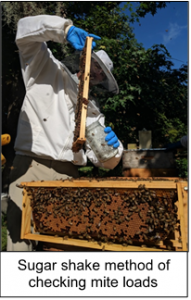
Beekeepers face many issues throughout the year that require tools and treatments- mites, disease, pests, low pollen intake, the list goes on. Our mission is to find what works best for central Florida beekeepers by surveying the methods and tools they use.
With the permission of the beekeepers, we will sample their bees for common viruses found in Florida bees. We can then correlate viral loads of honeybees with tools and methods, giving us insight into what works best for our community of beekeepers.
Pollinator Health and Abundance
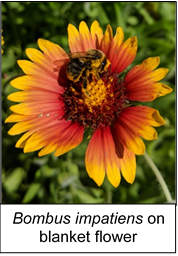
Honeybees aren’t the only critical pollinator, and we want to promote sustainable beekeeping practices to ensure both honeybees and native pollinators are staying healthy and abundant. Throughout our study, we will monitor pollinator’s (like bumblebees, carpenter bees, and sweat bees) abundances and viral loads to see which practices are most beneficial to every pollinator.
About the Researcher
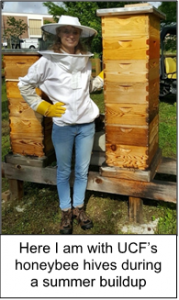
Hello, my name is Allison Malay and I am the “resident bee researcher” on campus at UCF. I began studying bees first as a beekeeper, then as a researcher. I was lucky to learn beekeeping under Dr. Patrick Bohlen here at UCF a few years ago and have continued to expand my repertoire of bee-related activities to include swarm capturing, bee lining, net catching bees of many species, and (of course) honey collecting. My research with bees includes determining attractants of honeybees and, most recently, ecological and viral research with both honeybees and other species.
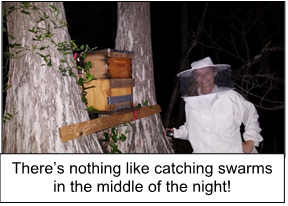 My current project (described above) has one end goal in mind: help bee populations thrive. By directly engaging with beekeepers, we are able to shape our study around community needs and put research into practical use. My project is centered around community input and that goes both ways- if you have any questions, concerns, ideas, or just want to talk bees please email me at al395458@ucf.edu.
Useful Links