Lunar Volcanism
Types of Volcanic Features
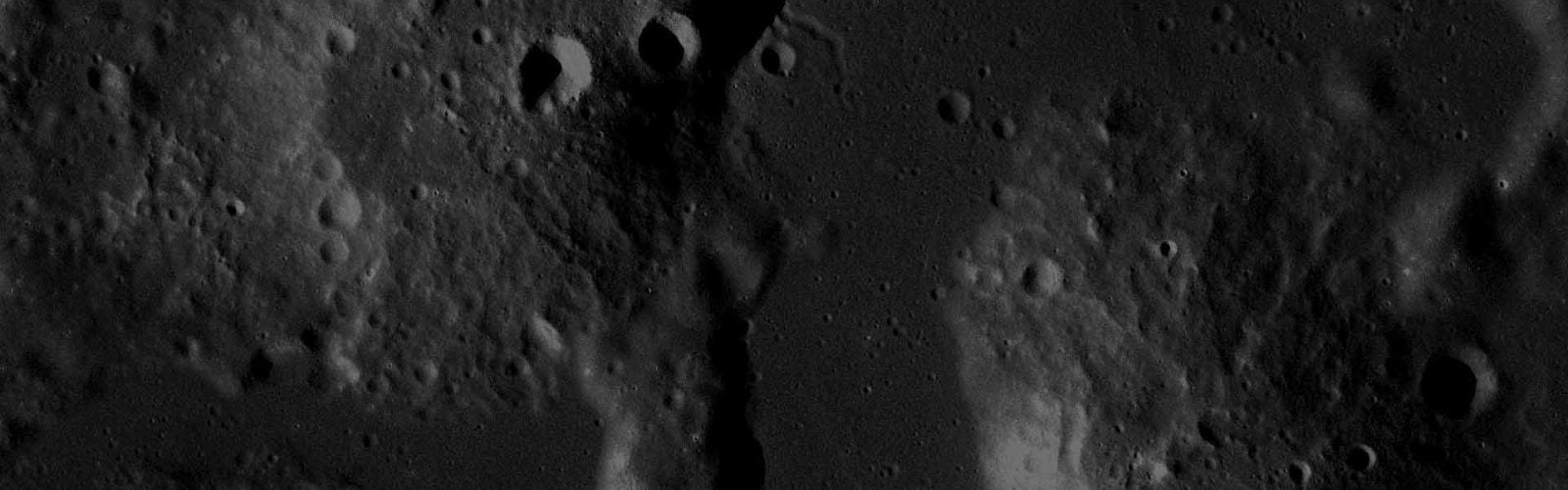
The Moon is a volcanic wonderland with multiple types of volcanism observed on its surface, although most lunar volcanism is concentrated on the lunar nearside (the side of the Moon we see from Earth). Most of the Moon’s volcanic features are similar to volcanic features that we see on Earth.
Hover over or click on each row in the table to see an example of the feature on the Moon.
| Feature | Description |
|---|---|
| Mare | Relatively flat planes of cooled basaltic (iron-rich) magma |
| Domes (shields) | 100-250 meter (330-820 ft) tall mounds of crystalized magma |
| Cinder cones | < 100 meter tall cone-shaped features |
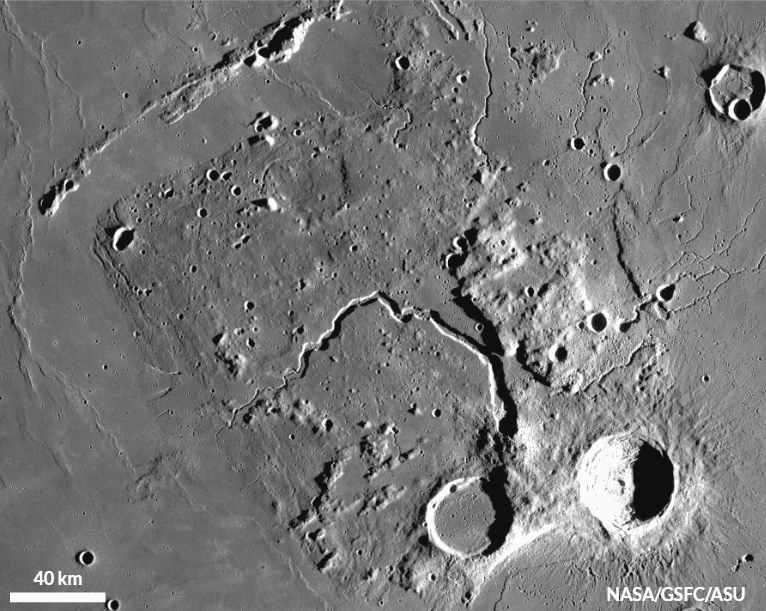
| Sinuous rilles | Crevices left by lava channels that usually meander away from impact craters |
| Pyroclastic deposits | Dark volcanic rocks & glass ejected during explosive eruptions |
Lunar Maria
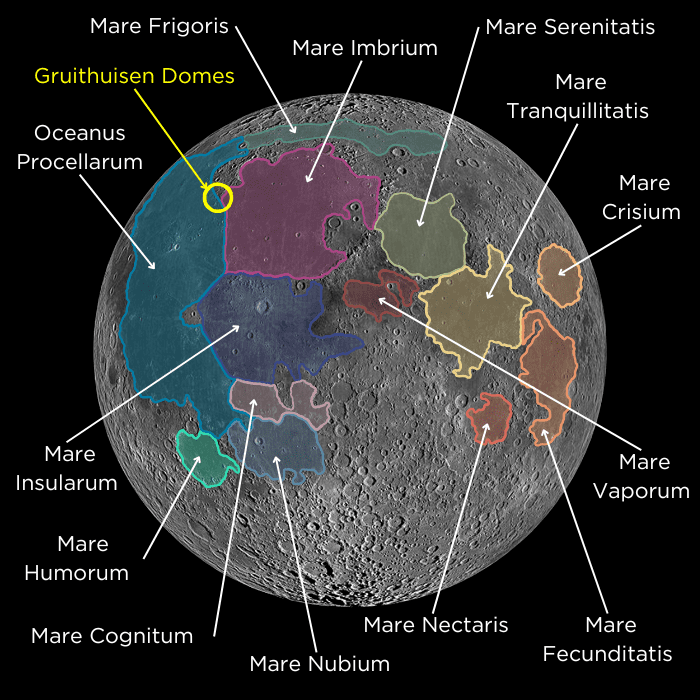
The lunar maria are large, dark, basaltic plains formed by low viscosity lava flowing into ancient impact basins. The term mare, which means “sea” in latin, was used by early astronomers when describing the Moon as these regions were thought to be large, ancient oceans or seas of water. Today, we know the maria cover approximately 16% of the lunar surface and are dark to the naked eye because the volcanic rocks making them up are iron-rich in composition. These are similar to volcanic rocks that we see on Earth in places like Hawaii and Iceland.
History of Lunar Volcanism
Lunar volcanism began around 4.4 billion years ago and was most active between 3.8 and 3.0 billion years ago; most of the lunar maria were formed during this time. Volcanic activity declined sharply after this, but recent observations from the Lunar Reconnaissance Orbiter suggest that smaller-scale volcanism continued until approximately 100 million years ago. While the Moon is not volcanically active today, the discovery of geologically young volcanic materials (~100 million years old) raises important questions about how such a small planetary body like the Moon could retain enough heat in its interior for volcanism to last that long.
Ga = billion years ago

Pre-Nectarian Period (> 4.1 Ga)
- Lunar magma ocean
- Crust crystallizes
- Earliest cryptomare sample
Nectarian Period (3.9 – 4.1 Ga)
- Most lunar granites (silicic rocks) crystalize
- Rare but high-volume volcanic eruptions
- Gruithuisen Domes formed
- Peak mare formation (high-Ti)
- Low-Ti basaltic mare formation
- Mare production begins to decline
- Continued decline in mare formation
- Youngest sinuous rilles
- Rare volcanic activity
- Irregular Mare Patches (IMPs)
- 120 million-year-old volcanic glass samples