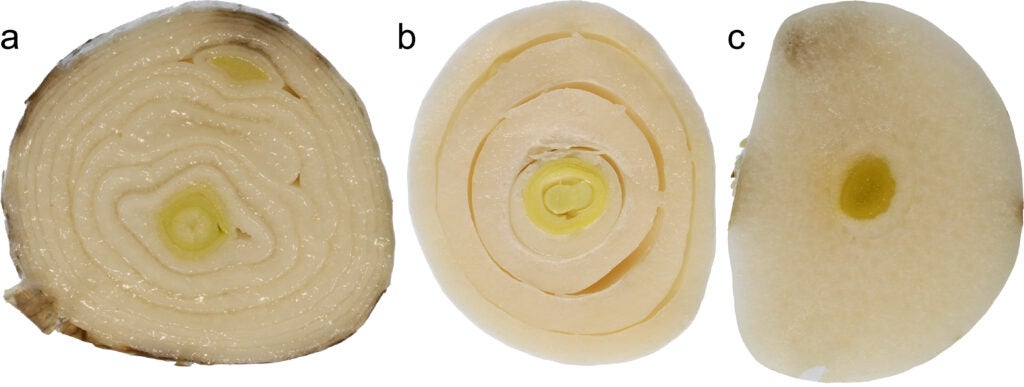
The term ‘bulbous’ is often colloquially used to describe any plant with an enlarged belowground structure (e.g., geophytes [tubers, bulbs, etc.]). But in the Bulbous Lab, bulbous plants are those that have a true bulb (e.g., onion, tulip, lily), which is defined as a short, compressed stem surrounded by layers of modified leaf tissues. These leafy layers are often fleshy and swollen with water and carbohydrates. Like carnivorous plants or succulents, bulbous plants are another example of the extraordinary ways that leaves have been molded by evolution into unique structures and functions. What is especially fascinating is that the bulbous habit has repeatedly evolved across monocots, and lineages rarely lose the bulbous habit once evolved. There are few studies that have examined bulb morphology and leaf development across these many independent lineages, and those that have looked into these topics have found variation in bulb size, the arrangement of leaves, sequence of leaf and flower formation, plus more. Many of the functional aspects of different bulb morphologies remain unknown, and what is being stored within these structures (and where) also requires investigation. In the Bulbous Lab, we are taking multiple approaches to further understand the ecological and evolutionary significance of the bulbous habit.