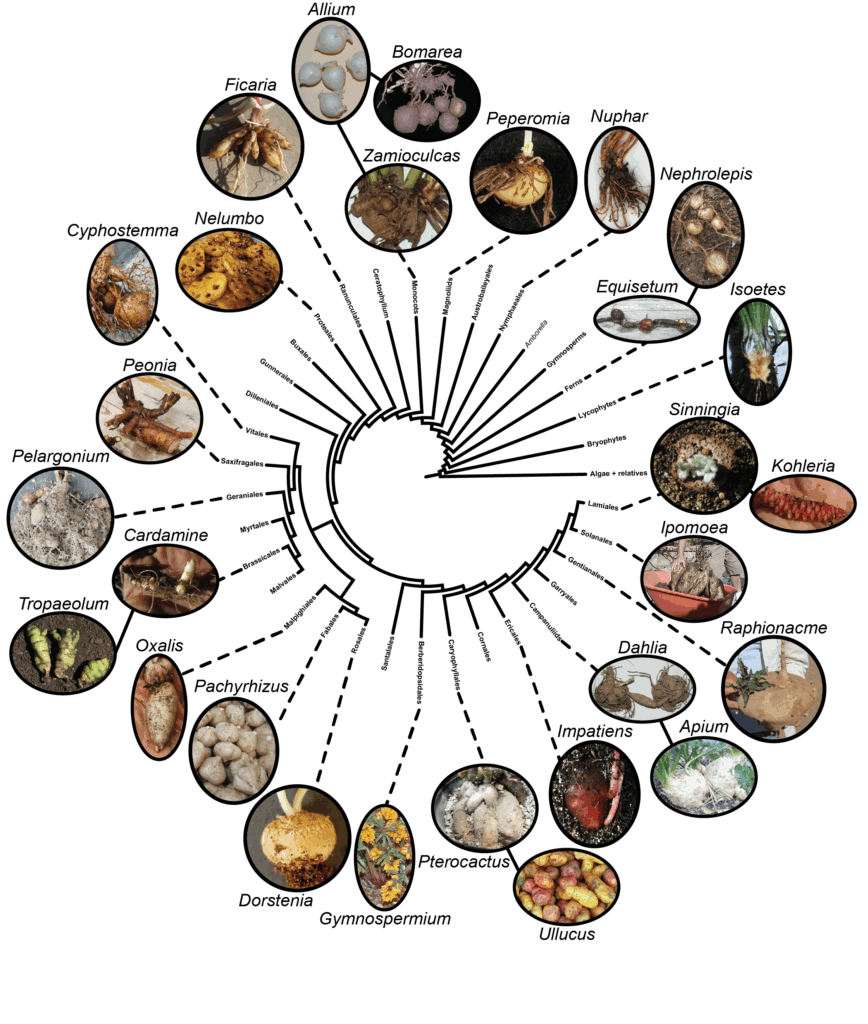
Across the plant tree of life, many lineages have evolved to have their buds placed below the soil’s surface. Some examples of Florida plants with belowground buds include the rain lilies (Zephyranthes spp.), runner oak (Quercus pumila), and green briar (Smilax spp.). Plants with belowground buds place their buds below the soil surface through a number of fascinating morphologies, such as rhizomes, bulbs and xylopodia, and some species can even resprout from their roots! The complex evolution and ecological importance of belowground plant structures and plant buds remain less well studied compared to aboveground plant parts (flowers, leaves, etc.). This is largely due to the hidden placement below the soil’s surface (out of sight, out of mind) but has also been hindered due to ambiguous or incorrect classification of many of the belowground structures. A major research avenue within the Bulbous Lab is to continually refine our understanding of the evolution and ecology of belowground bud placement using museum and field specimens, experimental manipulations and phylogenetics.