Simulation of cluster interaction with strong field laser pulses. Courtesy by A. Camacho Garibay
coming soon…
Research overview
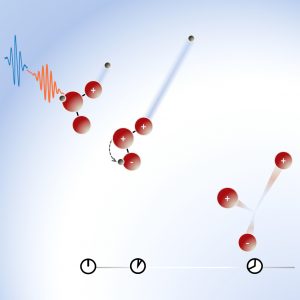
The electron and ion motion during and post photointeraction is of attosecond and femtosecond timescale respectively. We investigate photo-induced electron and ion dynamics and hence the energy absorption and redistribution at their natural time scales. Ultrashort laser pulses are applied to initiate and probe the dynamics to reveal the electronic and kinetic evolution of the target system – a fundamental aspect of photo-interaction. Monitoring both of the electron and ion motion simultaneously allows us to investigate the correlation between electronic and nuclear dynamics.
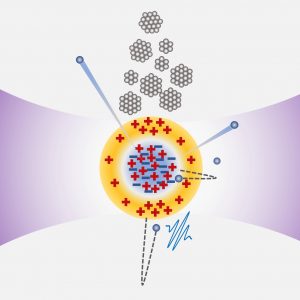
Plasmas as the fourth state of matter consist of positive and negative charges and can contain a large amount of energy. We generate plasmas in nano-size particles using laser pulses and investigate the energy exchange between the electrons and ions along with the expansion of the plasma. These plasmas bestowed with photo-energy give rise to highly energetic electrons and ions. We aim to understand absorption and energy dissipation mechanisms at different photon energy regimes and their structural and geometrical dependence.
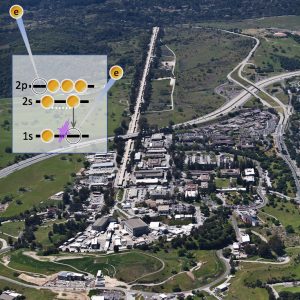
Free-electron lasers deliver very bright x-ray pulses of femtosecond durations. X-rays can access the most inner shell of light atomic element, making the spectral features atomic-species specific. The subsequent ionization and excitation processes are also unique phenomena in photointeraction. We develop core-hole spectroscopy and investigate charge dynamics induced by core- and inner-shell ionization and their secondary processes. Experiments are carried out at large facilities off the UCF campus, typically with a collaboration with other institutes within or outside the US.
Laboratories
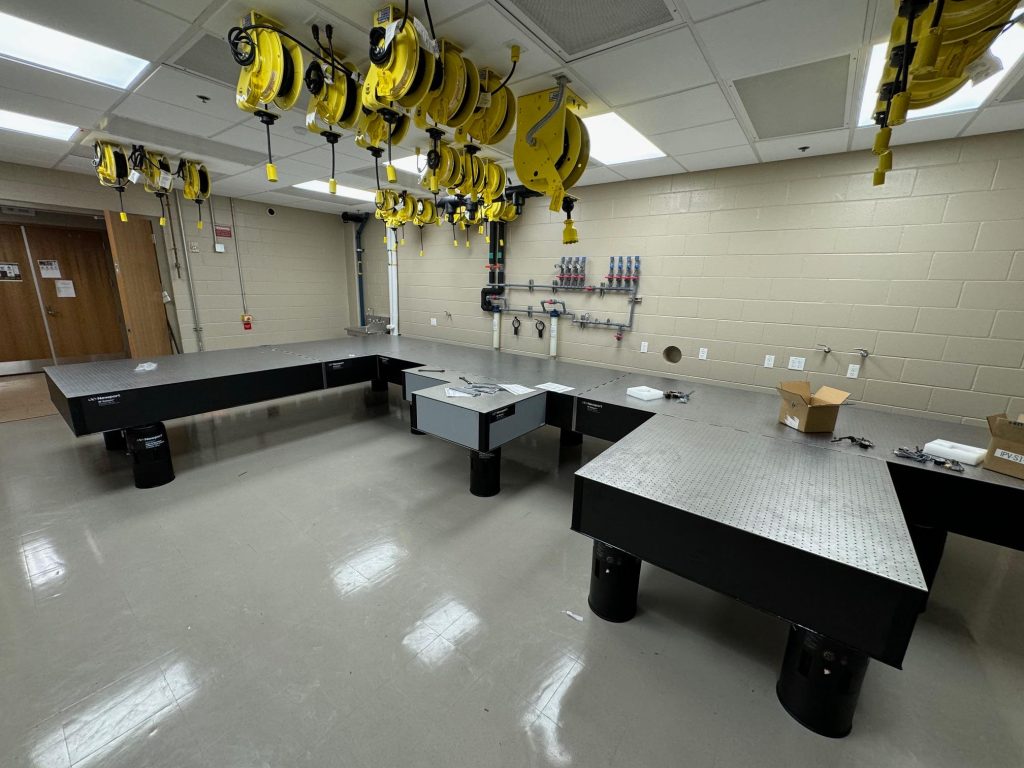
Atto Lab:
- Main laser system: 1 micrometer wavelength, High average power (100 W at 330 fs) and high repetition rate (200 kHz) fiber laser system. Final stage <10 fs pulse duration, 45W (delivered in May 2021)
- Secondary light sources: Extreme ultraviolet (XUV) laser of short pulse duration generated via high harmonic generation processes
- COLTRIMS-type double-sided electron and ion spectrometer system for simultaneous 3-D or 2-D momentum imaging of electrons and ions
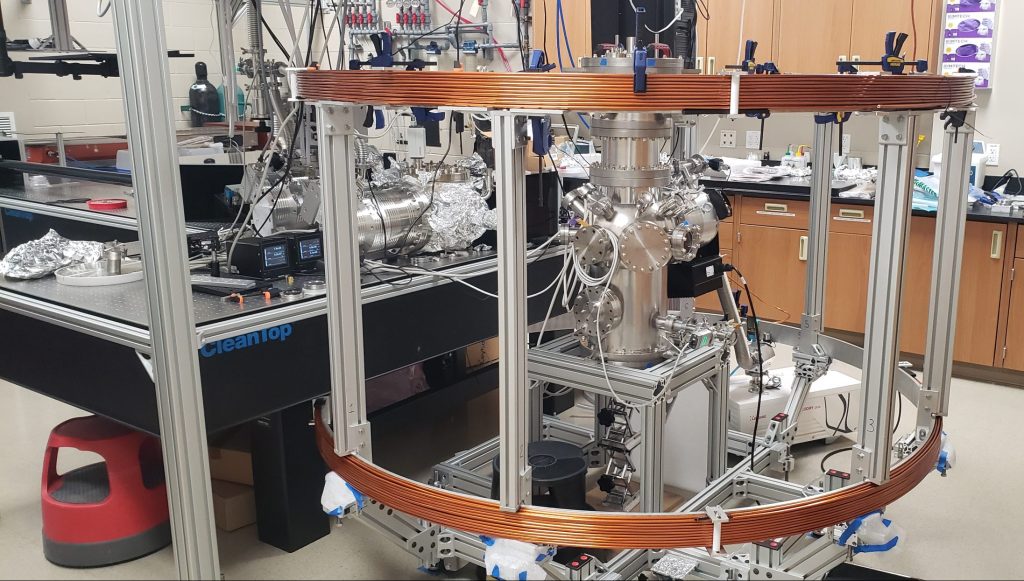
UFAST Lab:
- Main laser system: 2 micrometer wavelength, High average power (200 W at 200 fs output) and high repetition rate (100 kHz) fiber laser system. Final stage 12 fs (<2-cycle) pulse duration, 120W (to be delivered in Jan. 2025)
- Secondary light sources: attosecond soft x-ray (water window) pulses, attosecond XUV pulses, few-cycle long-wavelength infrared pulses, single cycle THz pulses
- Double sided VMI, reflective transient absorption spectrometer
Opportunities
Recruiting now!
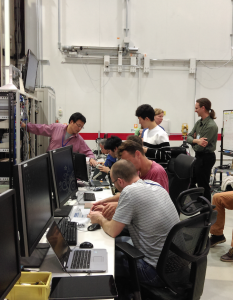
Research in my group will provide opportunities for hands-on experience with high power ultrafast lasers and spectroscopy methods and opportunities for deep understanding of the involved laser technology, scientific approach, physics fundamentals that lead to interdisciplinary applications. In addition to the in-house research at UCF, we also carry out and participate research projects at national laboratories and international facilities.
Open positions