
Ecosystems are dynamic and continually changing in response to natural processes, human activities, and climate variability. Our research examines how these transitions influence biogeochemical cycles and the ecosystem services that society depends upon, including carbon storage, water quality improvement, and nutrient removal.
Projects on Ecosystem Transitions:
-
- The interplay of nitrogen loading and ecosystem sustainability in threatened wetlands: an extension of the WETFEET project (2023-2026). Funded by NSF Division of Environmental Biology (In collaboration with Villanova University)
https://www.wetfeetproject.com/
WETFEET II investigates how two major drivers of global change, mangrove expansion and nutrient enrichment, are reshaping coastal marsh ecosystems along Florida’s Atlantic coast. Using large-scale field experiments at two study sites, we examine how vegetation type, nitrogen inputs, and landscape position interact to influence ecosystem structure and function.
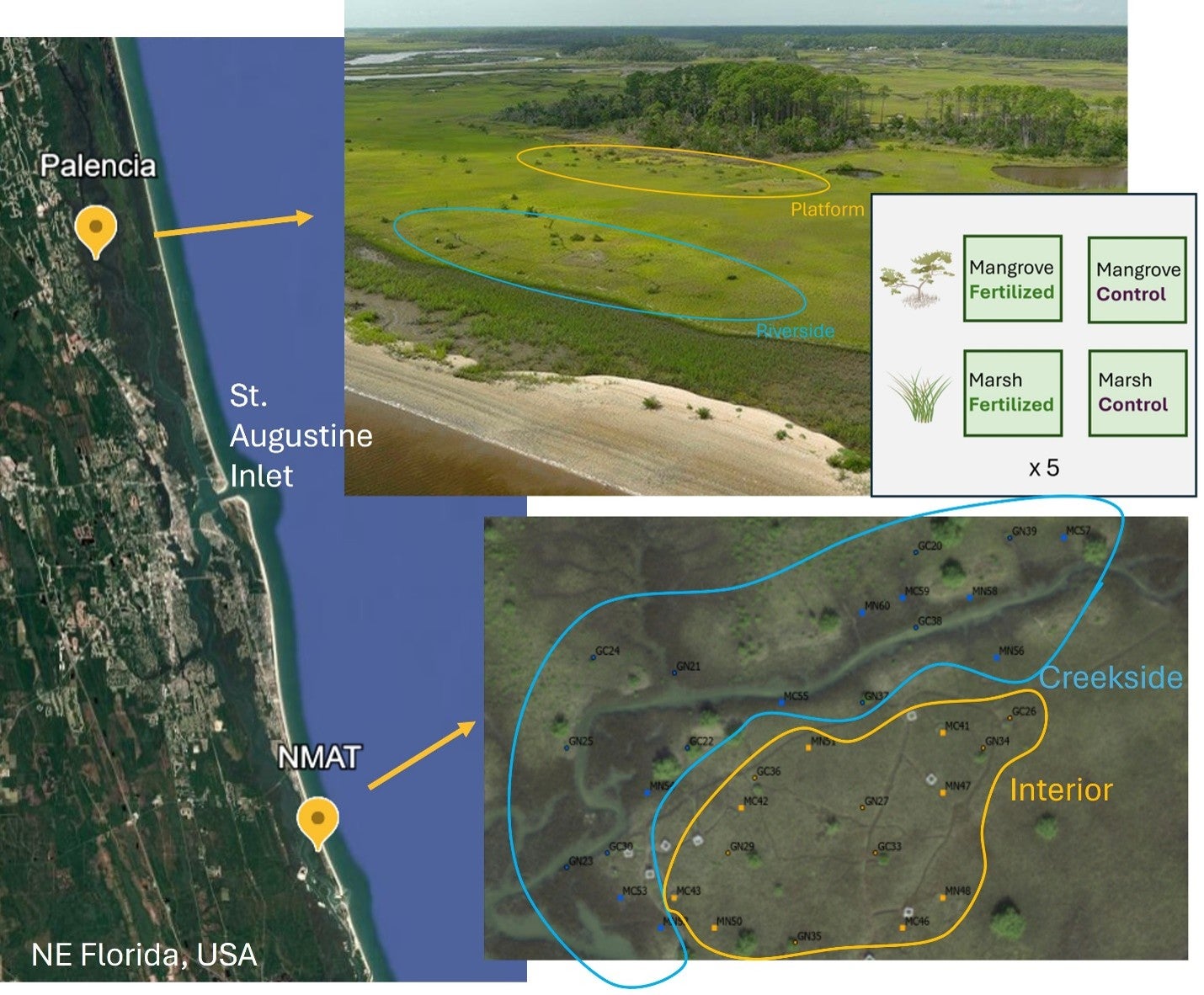
The two field experimental sites used for WETFEET. Each is comprised of 40 plots. NMAT was established in 2022 and Palencia in 2024

Mercedes Pinzon collecting soils cores at NMAT
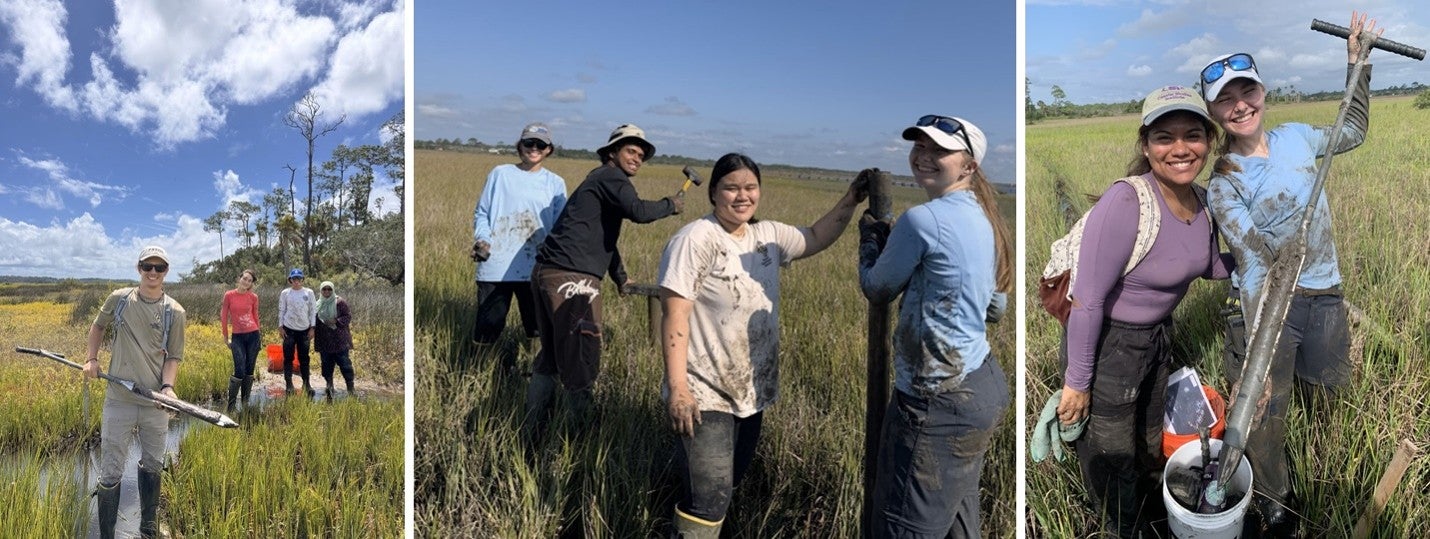
Palencia field work
2. Roots and rakes: Exploring the roles of altered hydrology and nutrient regimes in sustaining the coastal wetlands of Northeast Florida (2022-2025). Funded by Friends of the GTMNERR (In collaboration with Villanova University)
https://www.wetfeetproject.com/roots-and-rakes

Coastal wetlands worldwide are experiencing degradation, erosion, and submergence as a result of environmental change and human impacts. This project compared stable and degrading marshes to better understand the causes and consequences of wetland loss, with particular emphasis on belowground processes that influence ecosystem resilience.
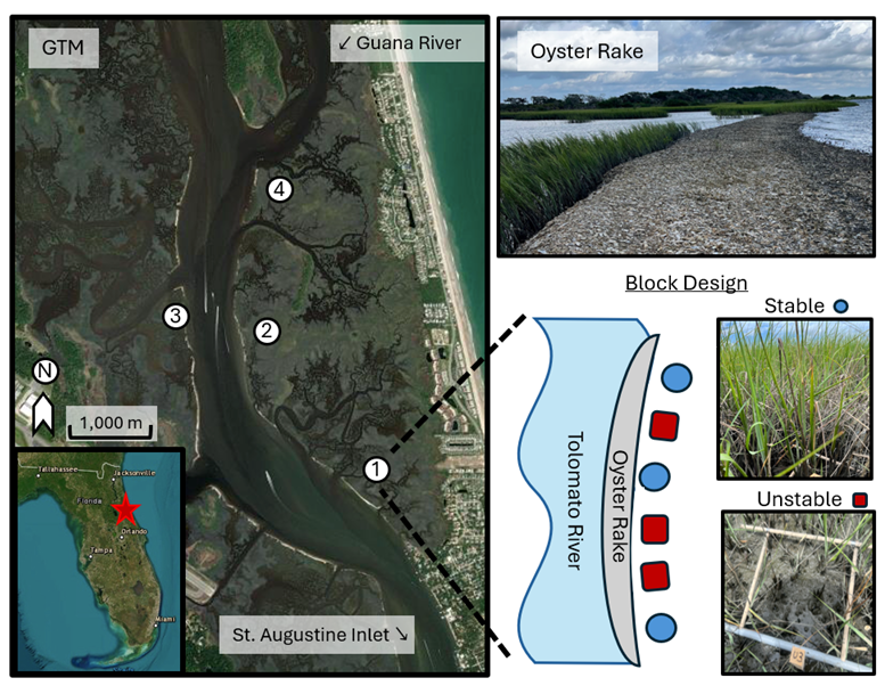
Roots and Rakes study site and design, located in NE Florida, USA
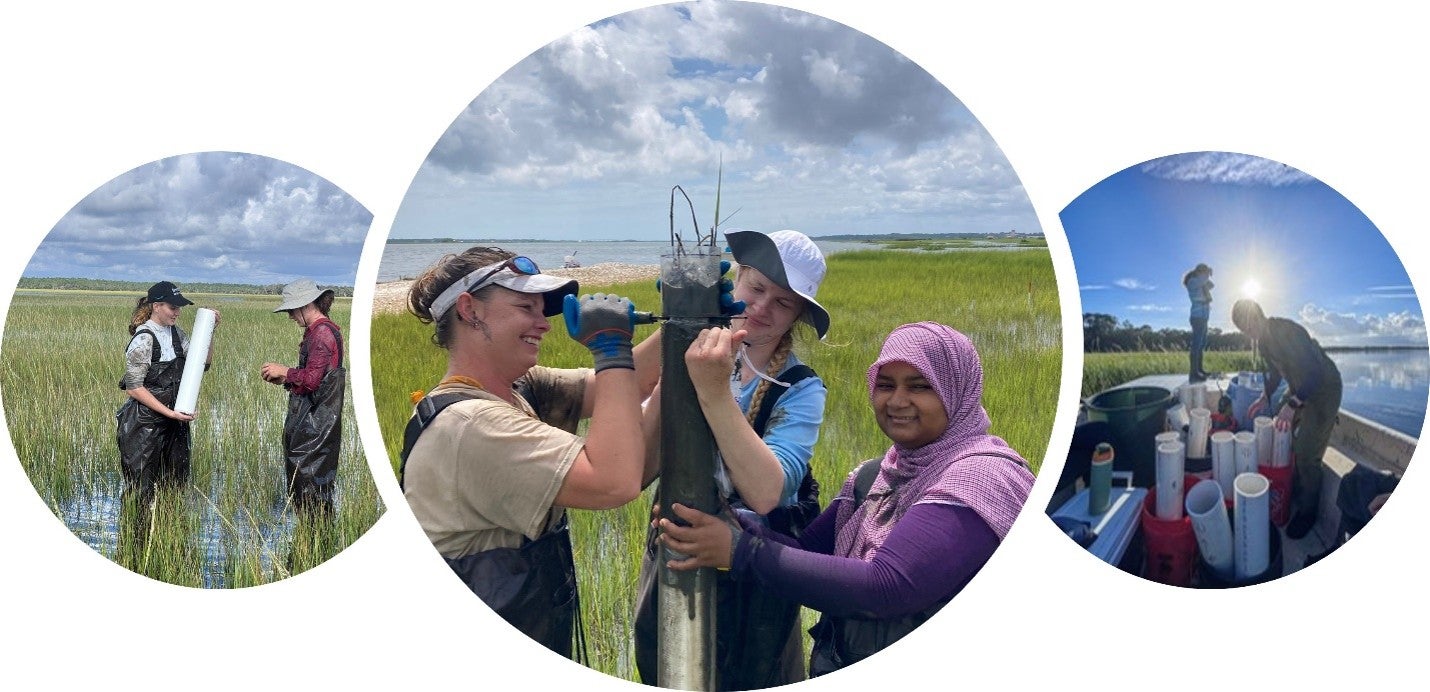
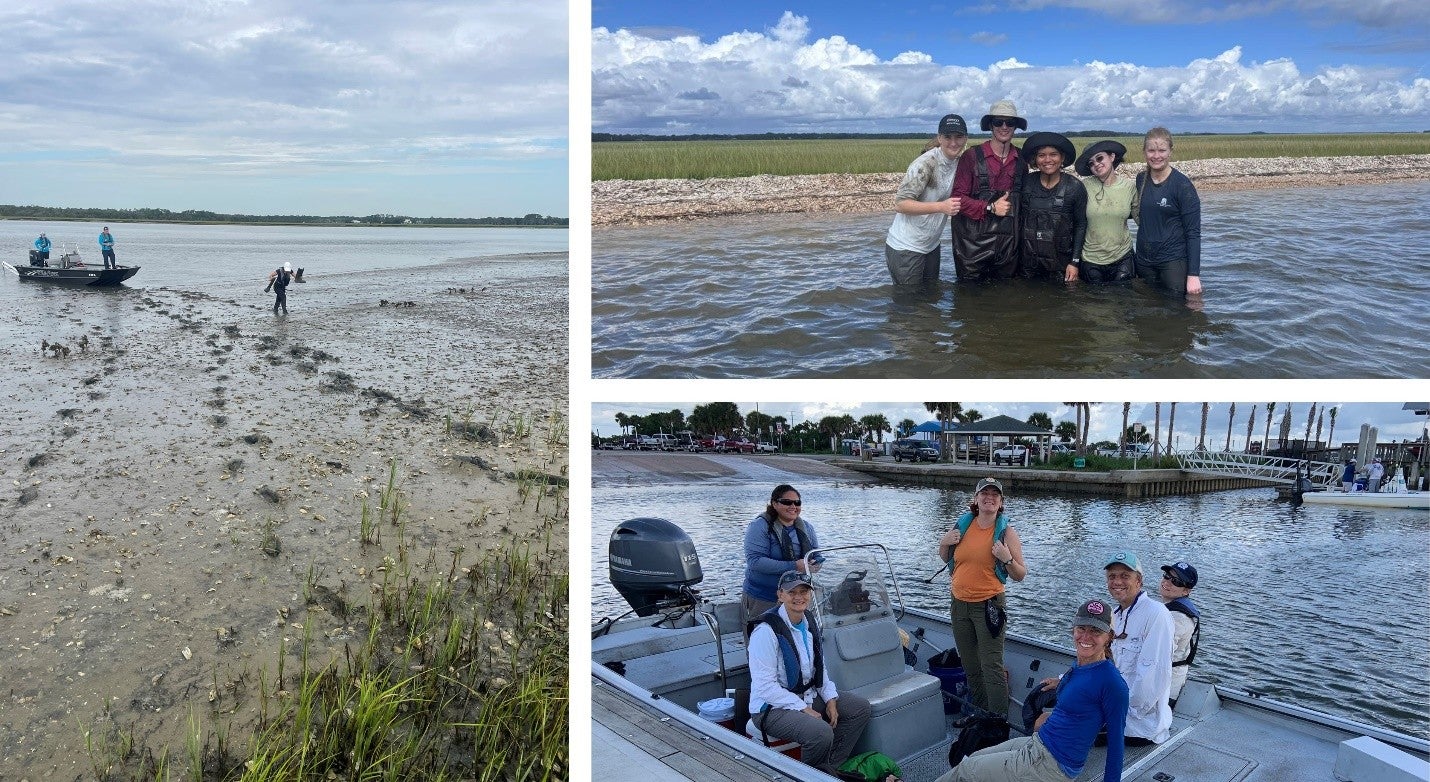
Roots and Rakes soil collection and field work
