
The Human Factors and Cognitive Psychology Program is hosting the inaugural Richard Gilson Innovation in Multimodal Information Processing (MIP) Distinguished Lecture Series on Friday, April 3rd, 2026. This is a donor sponsored event in honor of UCF Psychology Professor Emeritus, Richard Gilson. We are honored and excited to host Professor Charles Spence, University of Oxford (UK), as our distinguished lecturer. The title of this year’s lecture is: “Connecting the senses across time and space: Crossmodal correspondences in science, art, & design”.
📅 Date: Friday, 04/03/2026
🕑 Time: The talk will be from 1:00pm-2:00pm, followed by a reception from 2:00pm-3:00pm
📍 Location: John C. Hitt Library Solarium Room 402, UCF Main Campus
Please RSVP by 03/24/26
Biography
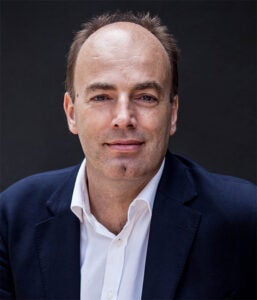 Professor Charles Spence is a world-famous experimental psychologist with a specialization in neuroscience-inspired multisensory design. He has worked with many of the world’s largest companies across the globe since establishing the Crossmodal Research Laboratory (CRL) at the Department of Experimental Psychology, Oxford University in 1997. Prof. Spence has published over 1,250 academic articles and edited or authored, 16 books including, in 2014, the Prose prize-winning “The perfect meal”, and the international bestseller “Gastrophysics: The new science of eating” (2017; Penguin Viking) – winner of the 2019 Le Grand Prix de la Culture Gastronomique from Académie Internationale de la Gastronomie. “Sensehacking” was published in 2021, and “Digital Dining”, with Prof. Carlos Velasco, in 2025.
Much of Prof. Spence’s work focuses on the design of enhanced multisensory food and drink experiences, through collaborations with chefs, baristas, mixologists, chocolatiers, perfumiers, and the food and beverage, and flavour and fragrance industries. Prof. Spence has worked extensively in the world of multisensory experiential wine and coffee and has also worked extensively on the question of how technology will transform our dining/drinking experiences in the future.
Abstract
In this lecture, Prof. Spence will discuss the emerging scientific literature on the crossmodal correspondences; these are the sometimes-surprising, almost-synaesthetic, connections between the senses that we all share. The latest research shows that these ubiquitous correspondences play a key role in multisensory perception. Prof. Spence will take a brief look at the history of the correspondences before highlighting how our emerging understanding of these cross-sensory connections are now being integrated the worlds of art and multisensory experience design, including in the gastronomic arenas and in the context of sensory marketing and multimodal interface design.