
FIEA Students Debut Original Video Games During Cohort 22 Capstone Presentations
After a year of collaboration, creativity and problem-solving, Florida Interactive Entertainment Academy students unveiled original games that showcase both technical innovation and the teamwork behind modern game development.
Written by: Emily Dougherty | Published: August 10, 2026

The Florida Interactive Entertainment Academy (FIEA) at the Nicholson School of Communication and Media recently welcomed industry professionals, family members and fellow Knights to its annual Cohort 22 Capstone Presentations, where graduate students unveiled the original video games they spent the past year designing and developing.
The presentations marked the culmination of FIEA’s signature Capstone experience, during which multidisciplinary teams of students work together in a simulated game studio to create and release an original title. From project management and programming to art, design and production, students assume professional roles while navigating the same creative and technical challenges they can expect in the game industry after graduation.

For Kyle Desjarlais, a master’s student in interactive entertainment, Capstone brought a long-held idea to life.
Originally enrolling at UCF as a biomedical engineering student, Desjarlais eventually followed a lifelong passion for game development after encouragement from his mother. That decision ultimately led him to FIEA, where he pitched the concept that became his team’s game, Splinter.
Inspired by titles such as Bloodborne and Shadow of the Colossus, Splinter is a gothic hack-and-slash game that sends players inside the body of a massive magical creature to battle a cult determined to keep it alive.
“I’ve always enjoyed the idea of a game taking place inside of an unbelievably large creature,” Desjarlais says. “I revived the idea during the pitching phase of our projects on a whim, and the team really resonated with it.”
Throughout development, Desjarlais says the team’s focus extended beyond gameplay mechanics to creating a cohesive world where every artistic and design decision reinforced the game’s story.
“The number one thing I’ve learned in the FIEA program that I will carry into every aspect of life is how to be a team player,” Desjarlais says. “Making games is hard, and traversing through life is hard in general, so learning when to be patient, empathetic and understanding has been such a great lesson.”
Like Desjarlais, Dinara Mukhtarova discovered that the program helped refine not only her technical abilities but also her career path.
Originally from Azerbaijan, Mukhtarova came to the United States to pursue her dream of designing video games. After earning a bachelor’s degree in digital arts and sciences, she entered FIEA intending to become a level designer before realizing her passion is bringing creative teams together.
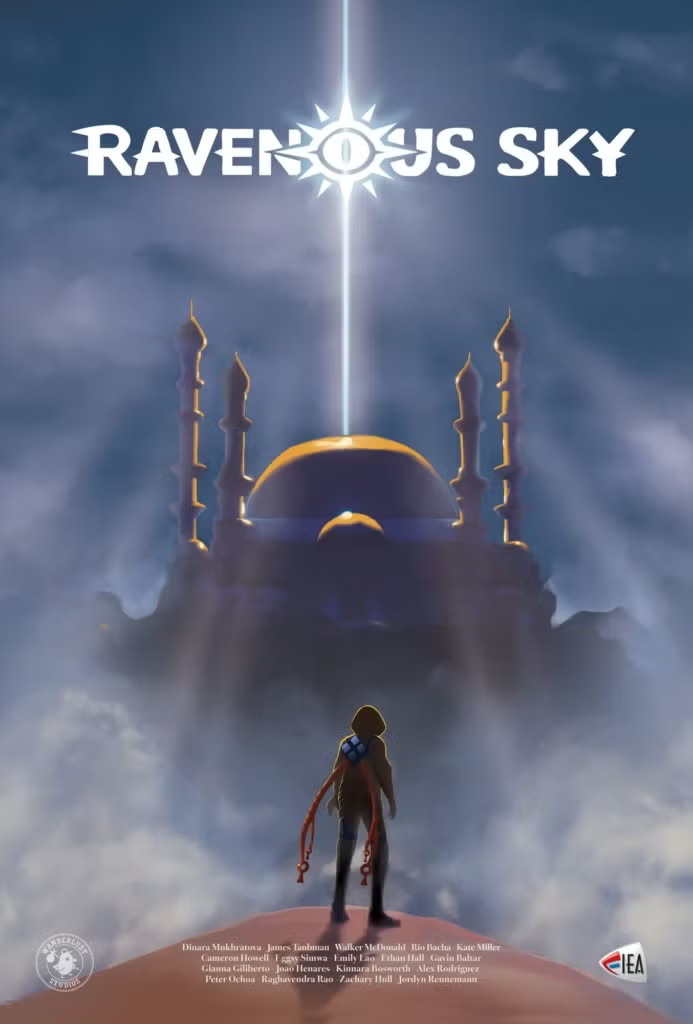
As project lead, she guided a team of 24 developers in creating Ravenous Sky, a narrative-driven traversal game set among floating islands surrounded by an endless storm.
Inspired in part by Florida’s hurricane seasons, the game explores themes of change, loss and perseverance through movement mechanics that require players to decide when to embrace powerful winds and when to resist them.
“FIEA taught me that successful production is not only about schedules and task tracking,” Mukhtarova says. “It is about understanding people, building trust and creating an environment where team members can communicate honestly.”
She says one of the team’s greatest accomplishments came after a significant scope change forced them to redesign major portions of the game while preserving its creative vision.
“Watching 24 people adapt, solve problems and transform that challenge into a cohesive game has been the most rewarding part of the project for me,” Mukhtarova says.
For Léa Fournier, the Capstone experience reinforced that game development extends far beyond writing code or creating artwork.
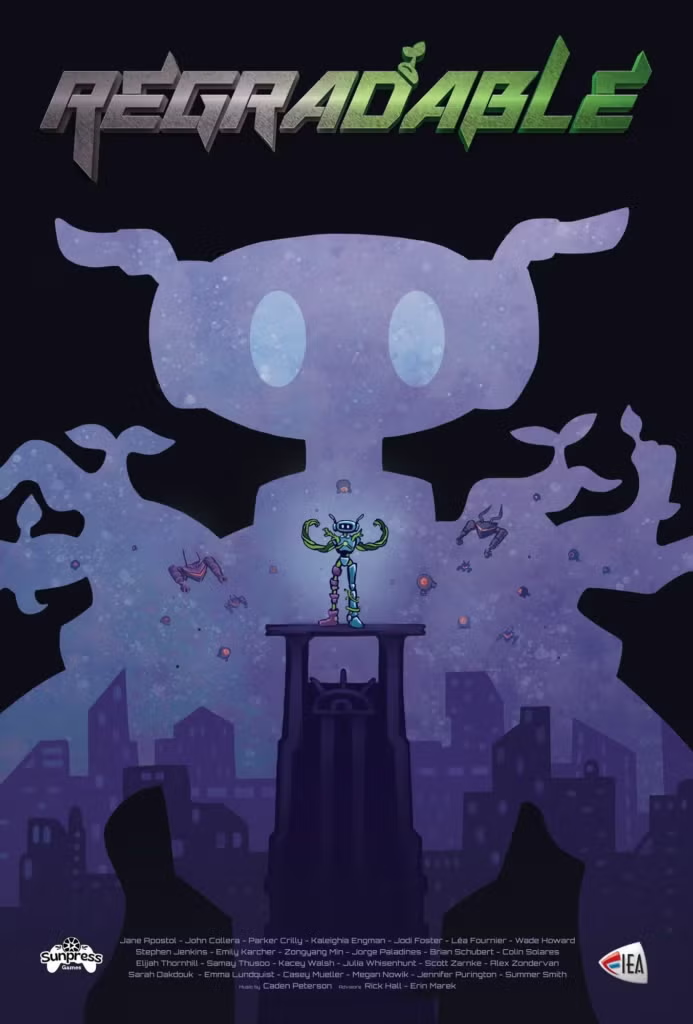
Before arriving at FIEA from Montreal, Canada, Fournier built a career producing theater before deciding to pursue interactive entertainment. As project lead, she helped oversee the development of Regradable, a 3D action platformer in which players use vine-like abilities to restore nature to a futuristic world overtaken by technology.
One of the team’s biggest technical challenges centered on creating the game’s signature swinging mechanic. To overcome it, students sought guidance from FIEA alumni who had worked on the Spider-Man games.
She says the experience highlighted the importance of resilience and teamwork.
“It is one thing to make a game by yourself,” Fournier says. “It is a much more challenging thing to make a game as a team. There are many moving parts, and everyone is relying on each other.”
For Q Lim, the journey to FIEA began with a career change.
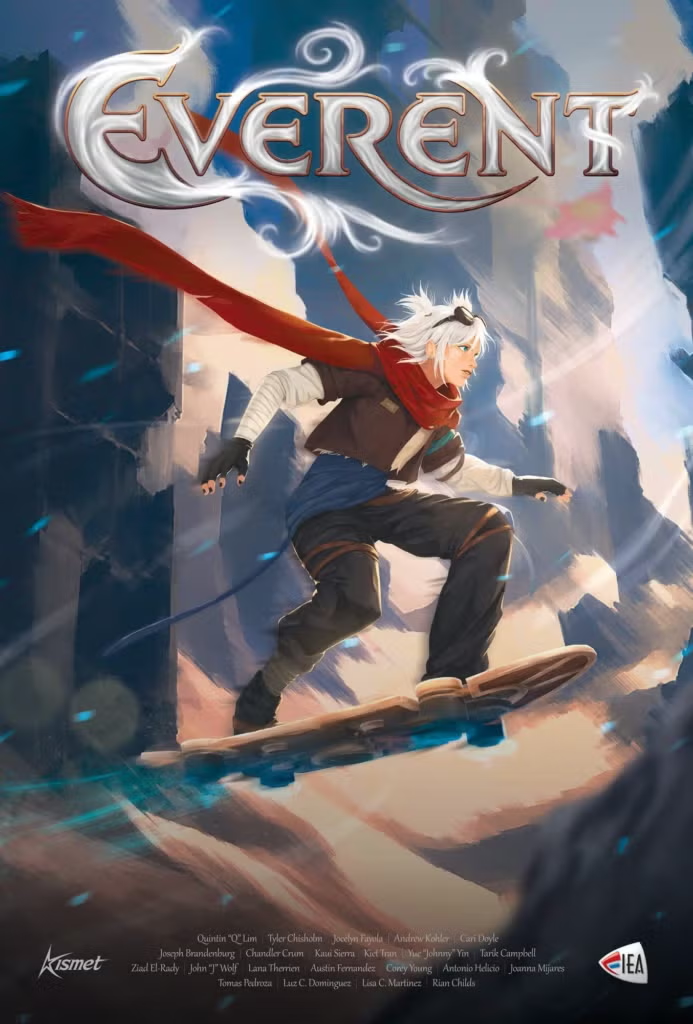
After working in marketing and advertising, Lim decided to pursue video game production, eventually leading his team in developing Everent, an open-world skateboarding game that allows players to traverse an abandoned city using a hoverboard capable of riding along nearly any surface.
“We built a big world for a player to explore and get lost in,” Lim says. “Having players try to make big jumps while upside-down or sideways is pretty fun.”
Lim says collaborating with a large multidisciplinary team provided lessons that can’t be replicated by individual projects.
“I got to understand different kinds of pipelines and how to build dependency maps,” Lim says. “That’s something I couldn’t do without a team.”
Daniel Diaz-Rivera also found his place through collaboration.
A digital media alumnus who has been creating games since high school, Diaz-Rivera says he initially found every aspect of game development exciting before realizing production allowed him to make the greatest impact by connecting disciplines and helping teams succeed.
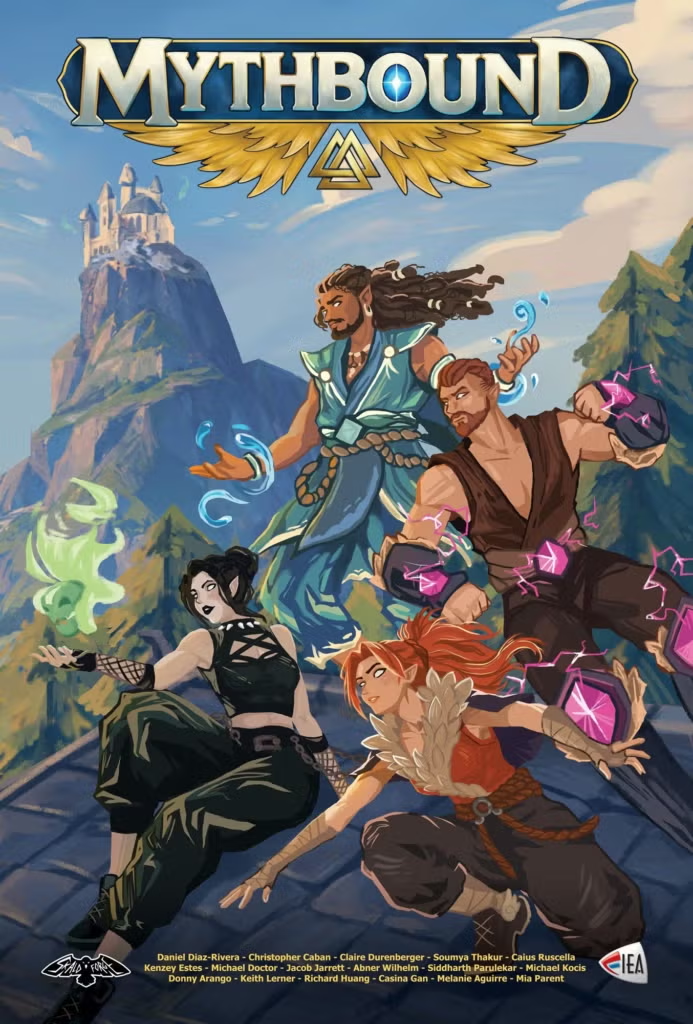
As project lead, he helped guide the development of Mythbound, a competitive multiplayer arena game inspired by titles including Apex Legends, Marvel Rivals and Valorant. The team combined Unreal Engine’s Gameplay Ability System, motion capture and Motion Matching technology to create fast-paced multiplayer gameplay centered around mythological characters.
“Mythbound was by far the most ambitious, technically challenging and rewarding project I’ve ever worked on,” Diaz-Rivera says.
Beyond developing the game itself, Diaz-Rivera says Capstone taught him how to lead large teams, adapt to unexpected challenges and maintain trust throughout demanding production schedules.
“Most of all, the FIEA program taught me grit,” Diaz-Rivera says. “These experiences have given me the confidence to apply for mid-level roles and a fighting chance in today’s highly competitive industry.”
Although each team’s game featured its own world, mechanics and artistic vision, students agreed that the greatest lesson from Capstone was learning how to work alongside others toward a shared goal.
“What you will get out of the program will be what you’re willing to put into it,” Desjarlais says. “It is difficult, and it is demanding, but it can be the single most fruitful and rewarding experience if you put in the work and give it your all.”