
UCF Big Data Analytics Symposium Connects Students to Real-World Impact
Industry leaders, researchers and students gathered for a day of panels, keynotes and networking exploring how data is shaping decisions across transportation, aviation, and workforce sectors.
Written by: Emily Dougherty | Published: April 13, 2026
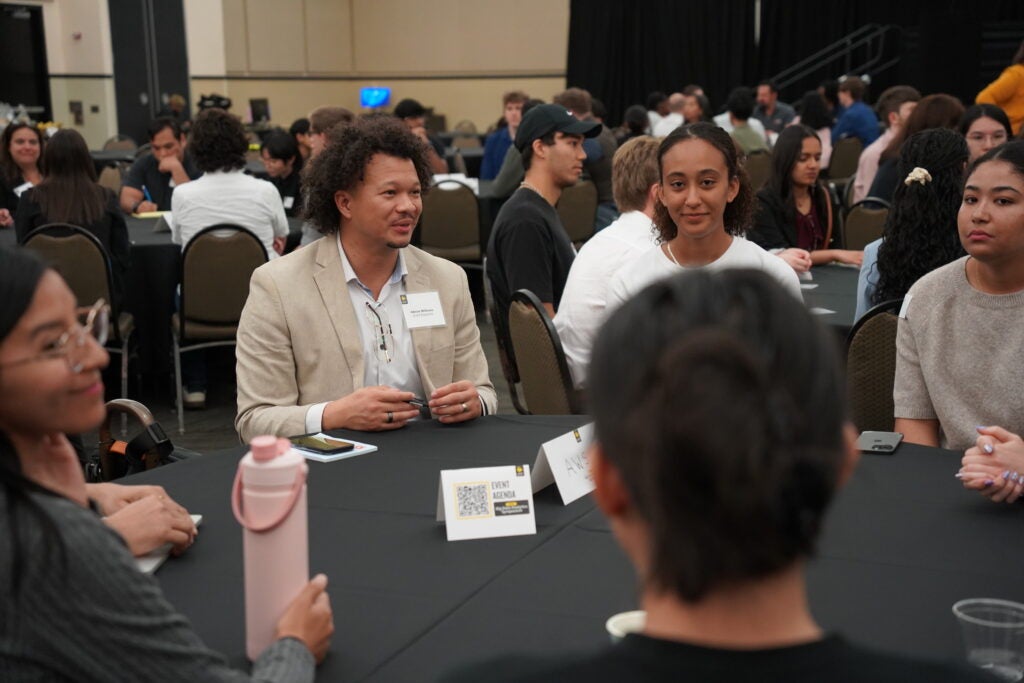
The 2026 Big Data Analytics Symposium, hosted by the College of Sciences’ School of Data, Mathematical, and Statistical Sciences (SDMSS), brought together students, faculty, alumni, community members and industry professionals for a full day of discussion on the growing role of data in real-world decision-making.
Held in the Pegasus Grand Ballroom, the event welcomed hundreds of attendees and highlighted how data analytics is shaping industries ranging from transportation systems, aviation safety and workforce development.
This year’s symposium also marked the first time the event was hosted under the newly established school.
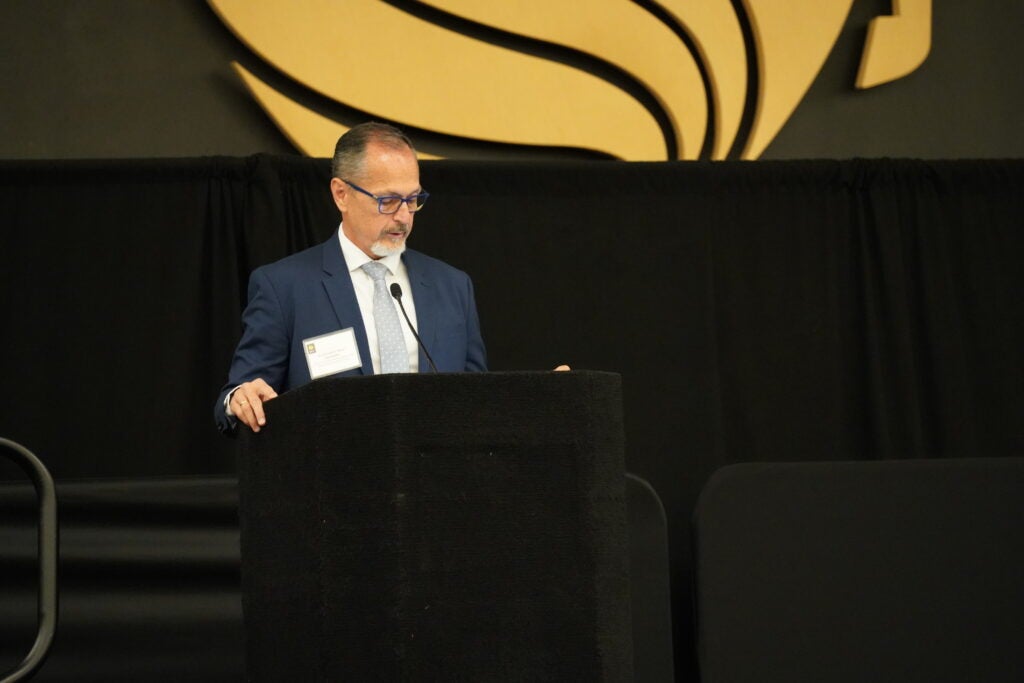
In opening remarks, Dr. Florencio “Eloy” Hernandez, interim director of SDMSS, emphasized the significance of the moment and the school’s broader mission.
“SDMSS was officially established last semester but today marks the first time the Big Data Analytics Symposium is being hosted under our new school,” he says. “Our goal is to unify mathematics, statistics and data science while cultivating a community dedicated to solving complex, real-world problems.”
Throughout the day, sessions highlighted how data is actively informing decisions across high-impact sectors, from aviation safety to transportation systems and workforce analytics.
The symposium featured keynote presentations from industry leaders who shared insights on how data shapes strategy, innovation and operational decision-making.
Associate Professor of Statistics and Data Science Hsin-Hsiung “Bill” Huang presented his research on developing early warning systems using large-scale, global time series data. He explained how his team analyzes sparse, rapidly updating datasets to forecast emerging events, emphasizing that combining statistical methods with machine learning leads to more reliable and accurate predictions.
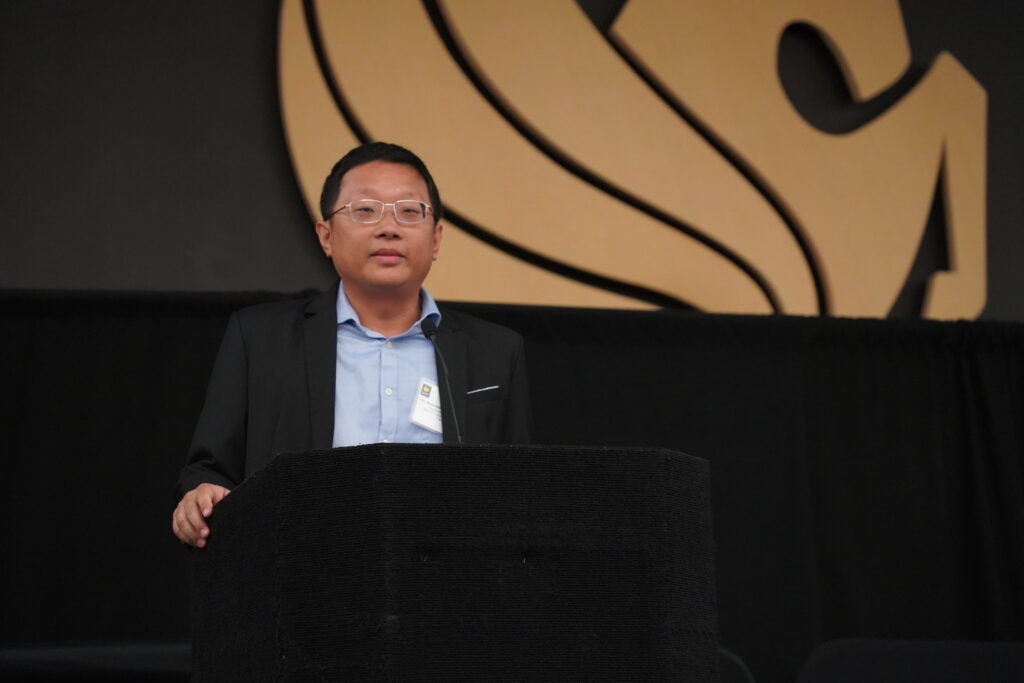
“We’re working with global, real-time datasets that are very large, but also sparse and noisy,” he says. “Deep learning models are powerful, but on their own they’re not always reliable when patterns change. By combining them with statistical methods and careful feature selection, we’re able to make more stable predictions and better detect important events.”
The work, already in use by national agencies, demonstrates how combining AI with statistical rigor can enhance decision-making in dynamic, global environments.
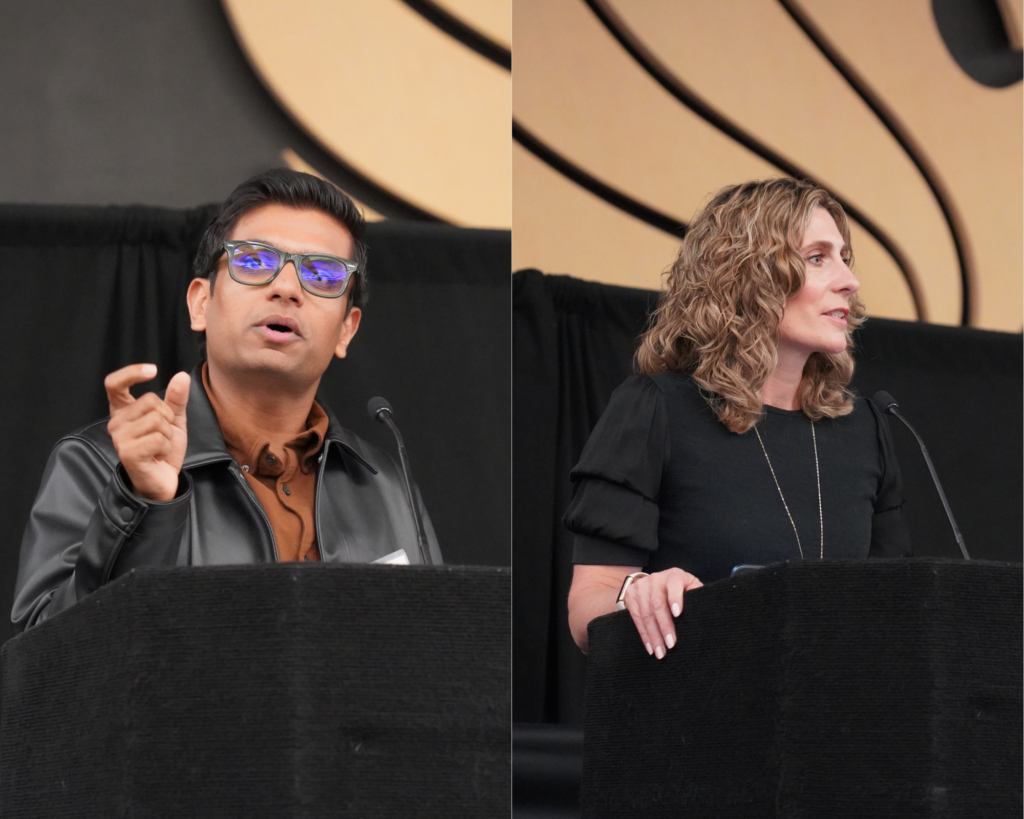
In the afternoon keynote, speaker Deep Patel from Robinhood presented “Real-Time at Scale: How Modern Platforms Turn Data Streams into Decisions,” explaining how companies like Netflix and Amazon use real-time data streams to drive rapid, large-scale operational and strategic decisions. Extending these ideas into scientific discovery, Assistant Professor of Aerospace Engineering Paula do Vale Pereira discussed the connection between space exploration and data.
“UCF is America’s space university, and big part of that mission is using data to help answer some of our biggest questions like whether we are not alone in the universe,” she says. “Through planetary exploration, NASA and other space agencies are sending missions to places like Jupiter to better understand the planet and its moons.”
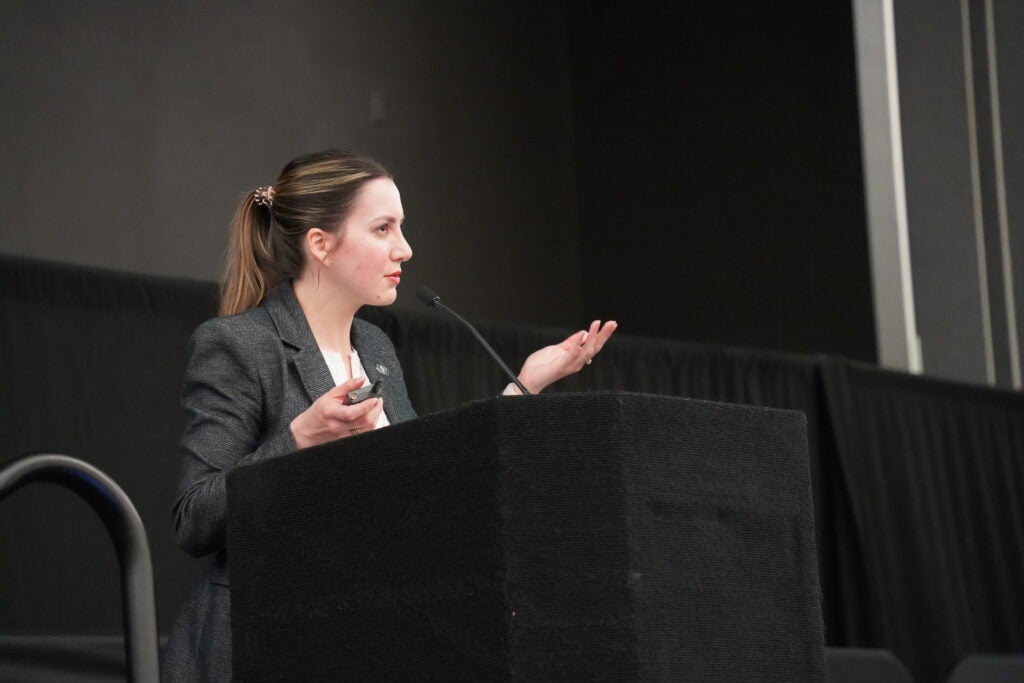
Examining one of these missions more closely, Vale Pereira, a former visiting research student at NASA, says the Juno mission uses data to determine when to collect imaging, but researchers are looking for a solution to make this process more efficient.
“You want to collect as much data as you can, but you are strapped because you have latency and you have low data rates,” she says. “There is a strong push for spacecraft autonomy, including onboard AI, data analysis, and data reduction on board.”
Industry engagement remained a central focus of the symposium, with professionals sharing how analytics is used in practice across corporate and government settings. These interactions provided students with direct exposure to potential career paths while reinforcing the importance of collaboration between academia and industry.
Career development and evolving pathways in data science were further explored during the Women in Data Science panel, moderated by Director of Advancement for COS, Chelsea Dalager.
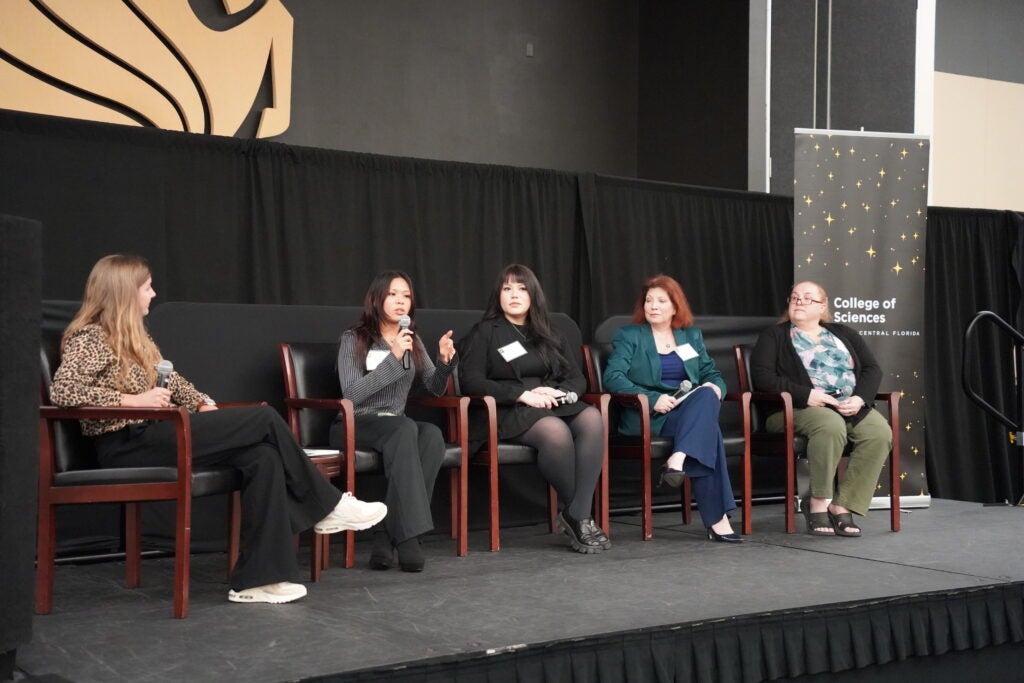
“Our conversation today is about helping students understand not just where data analytics can take them, but how to navigate that journey—because the workforce they’re entering is evolving just as quickly as the technology itself,” she says.
The panelists included Data Analyst and UCF MSDA-AI student April Beer, Early-Career Data and AI Professional Jania Fernan, Disney Experiences Director of Analytics Alicia Hawkins and Senior Statistical Modeling Analyst for AAA National Janice White McLaughlin.
Together, they reflected on non-linear career journeys, the growing role of AI and data governance, and the increasing importance of communication and trust in analytics. Panelists emphasized that while tools have made generating insights easier, the real value lies in validating results, understanding data quality and translating findings into actionable business decisions, skills that are critical for students preparing to enter an evolving workforce.
Speakers also emphasized that success in data science extends beyond technical skills, highlighting the importance of communication, critical thinking and the ability to translate complex analyses into actionable insights, especially in environments where conditions are constantly changing and unpredictable.
This unpredictability is a persistent challenge in airport operations, where flights, passenger flow and ground logistics are constantly changing.
Chief Operating Officer of the Greater Orlando Aviation Authority (GOAA), Theadore “Ted” Kitchens, explained how GOAA is addressing these issues by integrating predicative analytics into its operations. Rather than reacting to disruptions as they happen, the goal is to predict these disturbances in advance—leading to fewer delays and stronger coordination across day-to-day operations.
In the final keynote, Laura Demeo Chace, president and CEO of ITS America, emphasized the role of digital infrastructure in advancing transportation, highlighting shifts toward more proactive, interoperable systems that support safety, mobility and growth.
Beyond the keynote sessions, panel and roundtable discussions, attendees also connected with industry professionals from companies at the forefront of big data analytics such as Lockheed Martin, The Florida Department of Transportation, Mitsubishi Power, Robinhood and ITS America.
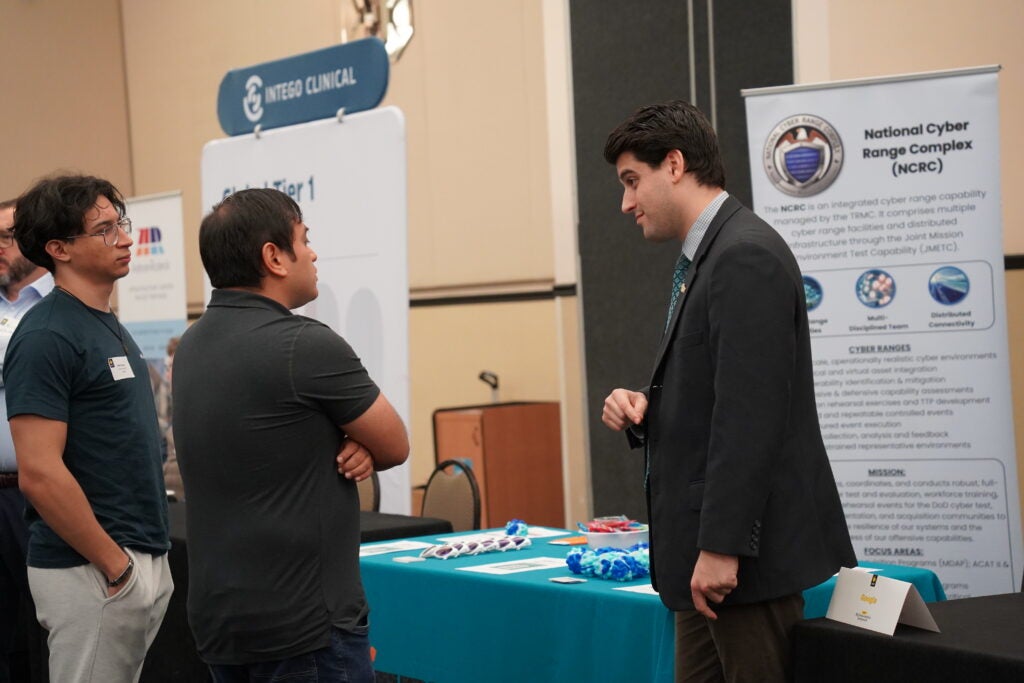
As SDMSS continues to grow, events such as the Big Data Analytics Symposium play a key role in fostering collaboration, advancing research and preparing the next generation of data-driven professionals.
“Today’s conversations reflect the mission of the School of Data, Mathematical, and Statistical Sciences—to advance quantitative sciences through innovative research, rigorous education and collaboration,” Hernandez says. “The work happening within our school is shaping student success, driving industry innovation, and creating meaningful impact across our communities.”