
Coastal restoration projects are often evaluated based on their ability to recover habitats or restore target species. At the ABL, we focus on an additional question: how restoration activities influence the chemical, microbial, and biogeochemical processes that support long-term ecosystem health and resilience.
Projects related to Coastal Restoration:
- Restore Lagoon Inflow (2024-2029). Funded by Florida Department of Environmental Protection (In collaboration with Florida Institute of Technology)
The Banana River, part of the Indian River Lagoon that extends down much of the east coast of central Florida, suffers from poor water quality that can cause fish and marine mammal fatalities. This project seeks to quantify the impact of a pilot-scale reintroduction of fresh ocean water to the lagoon.
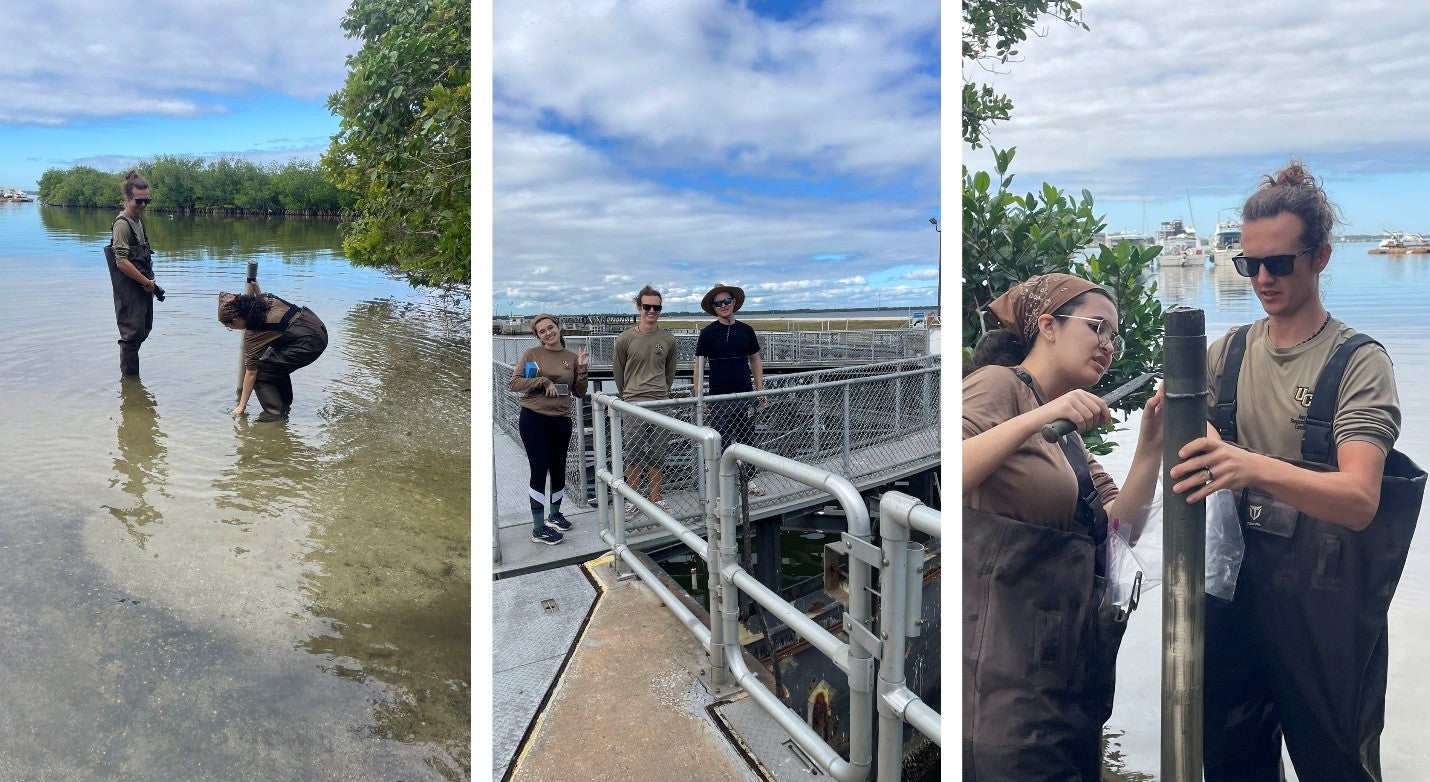
Collecting sediment cores to analyze current chemical properties
2. Plastic-free restored habitats: Reducing micro- and macro-plastic pollution in community-based restoration of coastal shorelines and oyster reefs (2024-2027). Funded by National Oceanic and Atmospheric Association, Marine Debris Program (In collaboration with Texas A&M University, University of Texas, and Texas Sea Grant)
As restoration practitioners increasingly try to avoid placing any plastic materials into the environment, new non-plastic alternatives need to be tested and evaluated. This project investigates the chemical composition and biogeochemical impact of several novel materials on the sediment and water where they are placed.
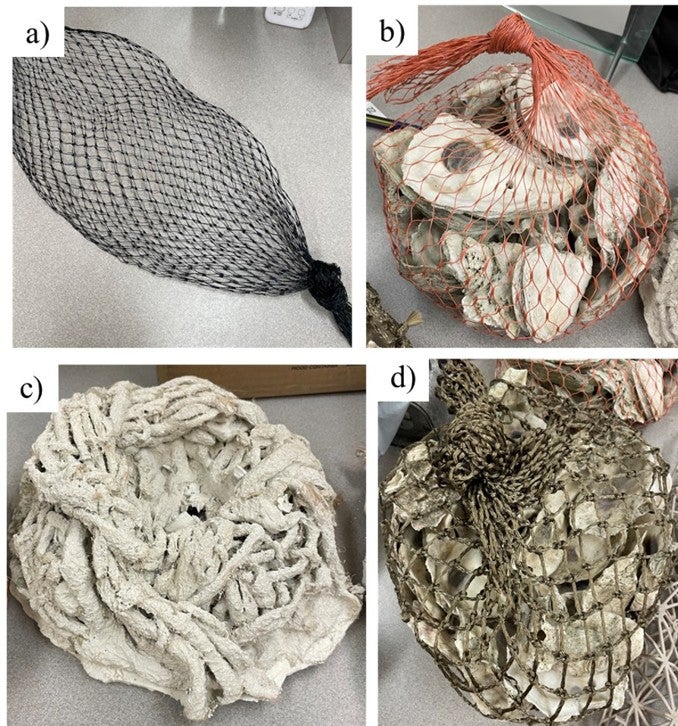
Restoration materials to be studied include a) Naltex® plastic mesh, b)BESE-mesh biopolymer, c) Cement-jute rings, and d) Natrx® basalt fiber bag

Field and lab analysis of restoration materials from Mosquito Lagoon, FL