Exolith Simulant: LHS-1D Lunar Highlands Dust Simulant
Mineralogy
| Component | Wt.% |
|---|---|
| Anorthosite | 74.4 |
| Glass-rich basalt | 24.7 |
| Ilmenite | 0.4 |
| Pyroxene | 0.3 |
| Olivine | 0.2 |
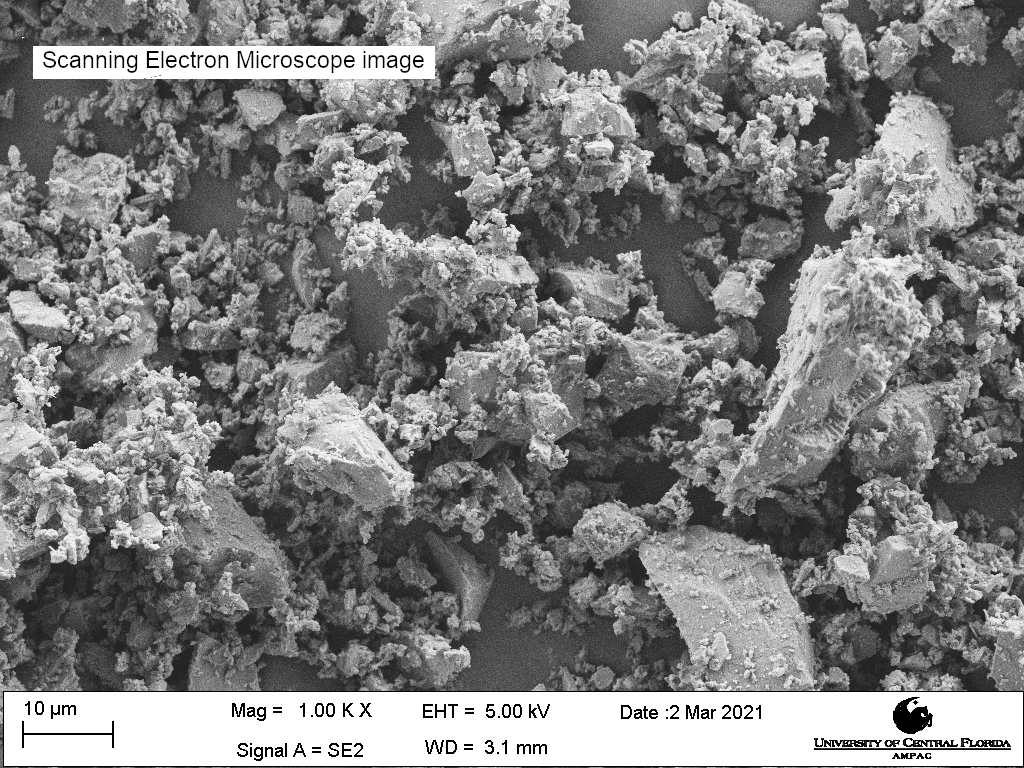
SEM Image of LHS-1D:
Simulant Name: LHS-1D Lunar Highlands Dust Simulant
Current Status: Available
Developed By: University of Central Florida
Publications: N/A
Current Status: Available
Developed By: University of Central Florida
Publications: N/A
UCF has ceased production of the simulant. The simulant is now offered by Space Resource Technologies, a spin-off company. You can reach Space Resources Technologies at the following email address: info@spaceresourcetech.com
The LHS-1D Lunar Highlands Dust Simulant has been developed by the CLASS Exolith Lab for use in dust mitigation experiments and other applications where very fine dust is needed. LHS-1D is made of the same base material as LHS-1, our high-fidelity, mineral-based simulant appropriate for a generic or average highlands location on the Moon. The simulant is not made of a single terrestrial lithology, but accurately captures the texture of lunar regolith by combining both mineral and rock fragments (i.e., polymineralic grains) in accurate proportions. This dust simulant contains only particles finer than 30 μm.
Images
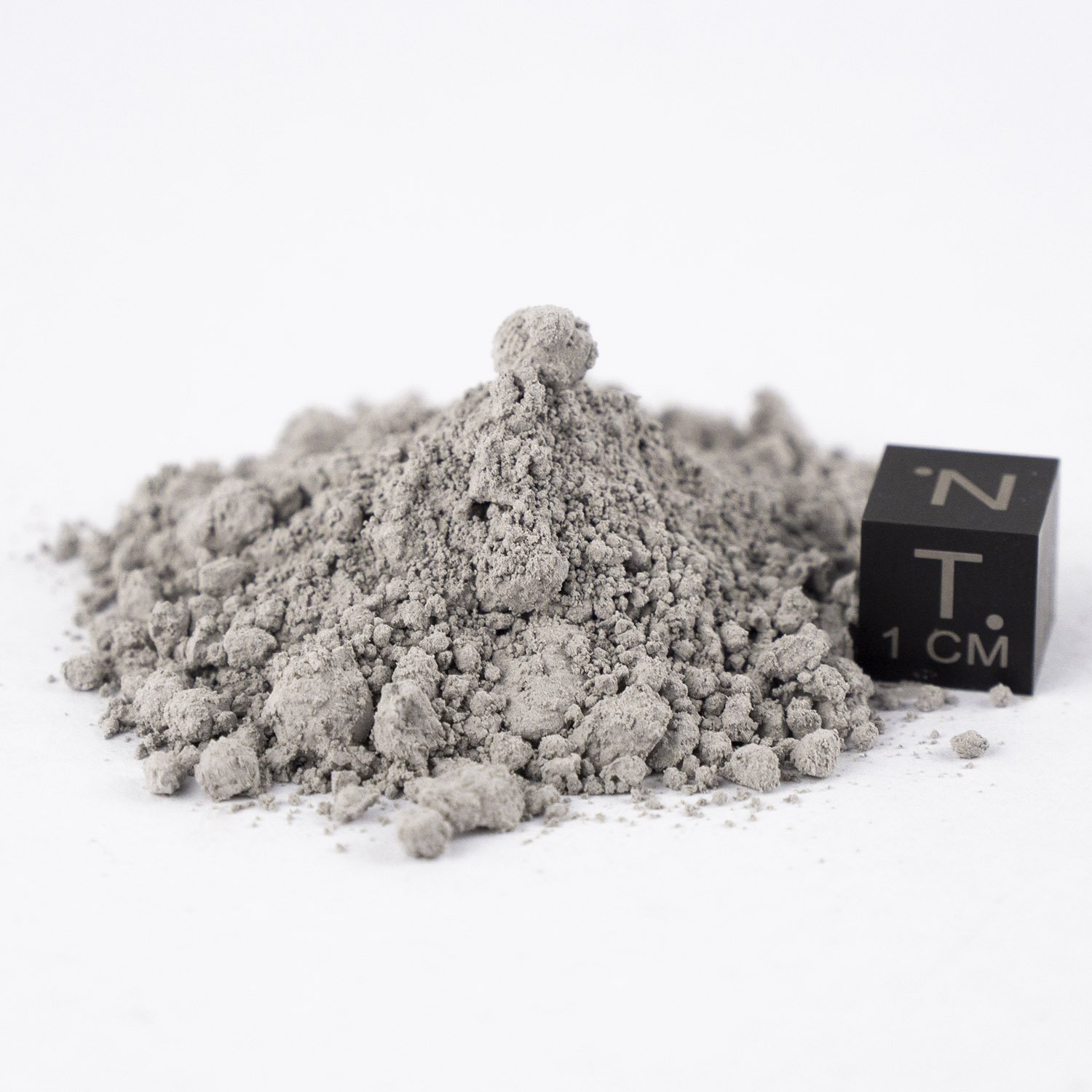
Photograph of LHS-1:
SEM Image of LHS-1D:
