
The UCF Planetary Sciences Group uses spacecraft data, images from the world’s most powerful telescopes, meteorites and moon rocks, and supercomputer calculations to investigate fundamental questions like these:
How did our solar system form? What do the surfaces of other worlds tell us about their history? What happens when a comet hits a planet? What’s going on in the atmospheres of extrasolar planets? Are there any other planetary systems like ours? Are we alone?
The Planetary Sciences Group works closely with the Florida Space Institute to grow space research at UCF and throughout Florida.
The department offers a PhD track in Planetary Sciences, a BS specialization and minor in Astronomy, classes, research and employment opportunities at all levels, workshops, Robinson Observatory, astronomical software, planetary seminars, and much more.
Planetary Sciences Faculty
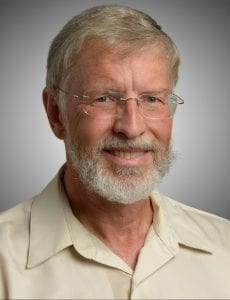
Dr. Daniel Britt
| The physical properties of Lunar and Asteroid regoliths and surfaces The economic geology and assessment of Lunar and Asteroid resources Development of simulants for Lunar, Asteroid, and Martian regoliths Processing of Lunar and Asteroid resources Effects of space weathering on volatile-rich asteroids. |
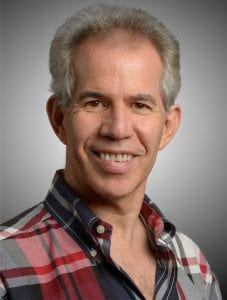
Dr. Humberto Campins
Dr. Campins. research area is astronomy. He studies comets, asteroids and other small bodies in the solar system using a variety of ground based, airborne and space based telescopes. This research is funded by NASA and by the National Science Foundation. One of his current interests is the role that comets may have played in the origin of water and organic molecules on Earth and Mars.
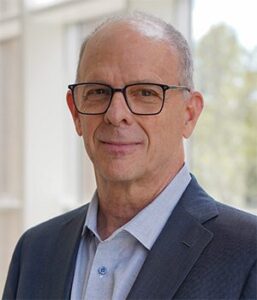
Joshua Colwell
Dean of the College of Sciences & Pegasus Professor of Physics
josh@ucf.edu
407-823-1911
407-823-0737
CSB 210 (main office) / PSB 444 and PSB 461 (labs)
Dr. Joshua Colwell
I study the origin and evolution of the solar system and in particular small bodies such as planetary rings, asteroids, comets, dust, and small moons. I was a Co-Investigator on the Ultraviolet Imaging Spectrograph (UVIS) on the Cassini spacecraft. I analyze observations of Saturn’s rings made by Cassini UVIS and model the structure and evolution of the rings. I design, build, and operate microgravity experiments to study the early stages of planet formation, the surfaces of small asteroids and moons, and the collisional evolution of planetary rings in the Stephen W. Hawking Center for Microgravity Research and Education.
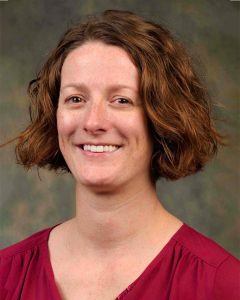
Adrienne Dove
Department Chair, Professor
adrienne.dove@ucf.edu
407-823-1882
PSB 430A (office) / PSB 409 (lab)
Dr. Adrienne Dove
Planetary sciences and dusty plasmas in the solar system. Microgravity and laboratory research on dusty plasmas, collisions, and planet formation.

Dr. Theodora Karalidi
Modeling and characterization of exoplanetary and brown dwarf atmospheres. Mapping exoatmospheres.
Spectropolarimetric modeling and characterization of brown dwarfs and exoplanets.
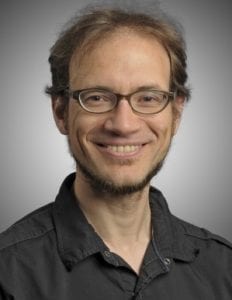
Yan Fernandez
Professor / Planetary Sciences Track Director
Yanga.Fernandez@ucf.edu
407-823-2325
PSB 133
Dr. Yan Fernandez
My area of research is comets and asteroids, which I have been studying since 1994. I am interested in the composition and physical properties of these objects, and how they compare to each other and other objects in the Solar System. Why? Because Small Bodies can tell us about the origin of the Solar System — what were the compositional and thermal conditions in the solar nebula and in the protoplanetary disk? I am also interested in how comets and asteroids have evolved, since the current state of the Solar System informs how we can understand its formation 4.6 billions years ago.

Dr. Joseph Harrington
Planetary and exoplanetary atmospheres.
Astronomical data analysis methodology.
Infrared observing techniques.
Open-source software and open science.
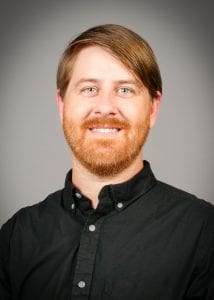
Dr. Richard Jerousek
Planetary rings and astrophysical disk dynamics

Dr. Kerri Donaldson Hanna
Associate Professor Donaldson Hanna’s research focuses on better understanding (1) the formation and evolution of airless bodies within our Solar System, (2) the distribution of planetary materials across the Solar System, and (3) the thermal infrared behavior of planetary materials. Her research combines spacecraft and telescopic remote sensing observations of airless bodies like the Moon, Mercury and asteroids, with laboratory measurements of analog materials utilizing bespoke environment chambers.

Dr. Ryan Ogliore
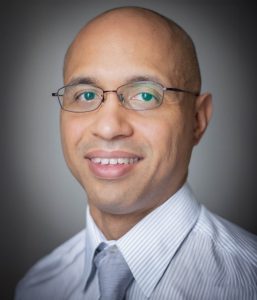
Dr. Ramses Ramirez
Planetary atmospheres. Exoplanetary and solar system planetary habitability. Mars paleoclimate. Habitable zone design. The intersection of biology and planetary habitability
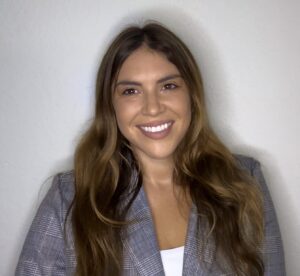
Dr. Alyssa Sokol
Research Scientists
Dr. E. Todd Bradley
Research: Mercury exosphere, Saturn’s rings composition
Dr. Julie Brissett
Research: Planet formation, dust accretion processes, microgravity experiments
Dr. Philip Metzger
Research: mechanics and characterization of planetary regolith
Dr. Noemí Pinilla-Alonso
Research: observation and modeling of comets, asteroids and KBOs
Dr. Gal Sari
Research: thermal and collisional evolution of comets, asteroids and planets